Municipal Survey: The COVID-19 epidemic has increased the need for child welfare and exacerbated mental health problems in client families
The difficulties faced by families and the need for support required by child welfare clients have increased due to the COVID-19 epidemic, reveals a municipal survey commissioned by THL and the Central Union for Child Welfare. The survey directed at the management level of child welfare units received responses from 85 municipalities and 18 joint municipal authorities.
Of the municipalities that responded to the survey, 40% estimated that the number of child welfare clients had increased due to the epidemic, and 47% reported an increase in the number of child welfare notifications.
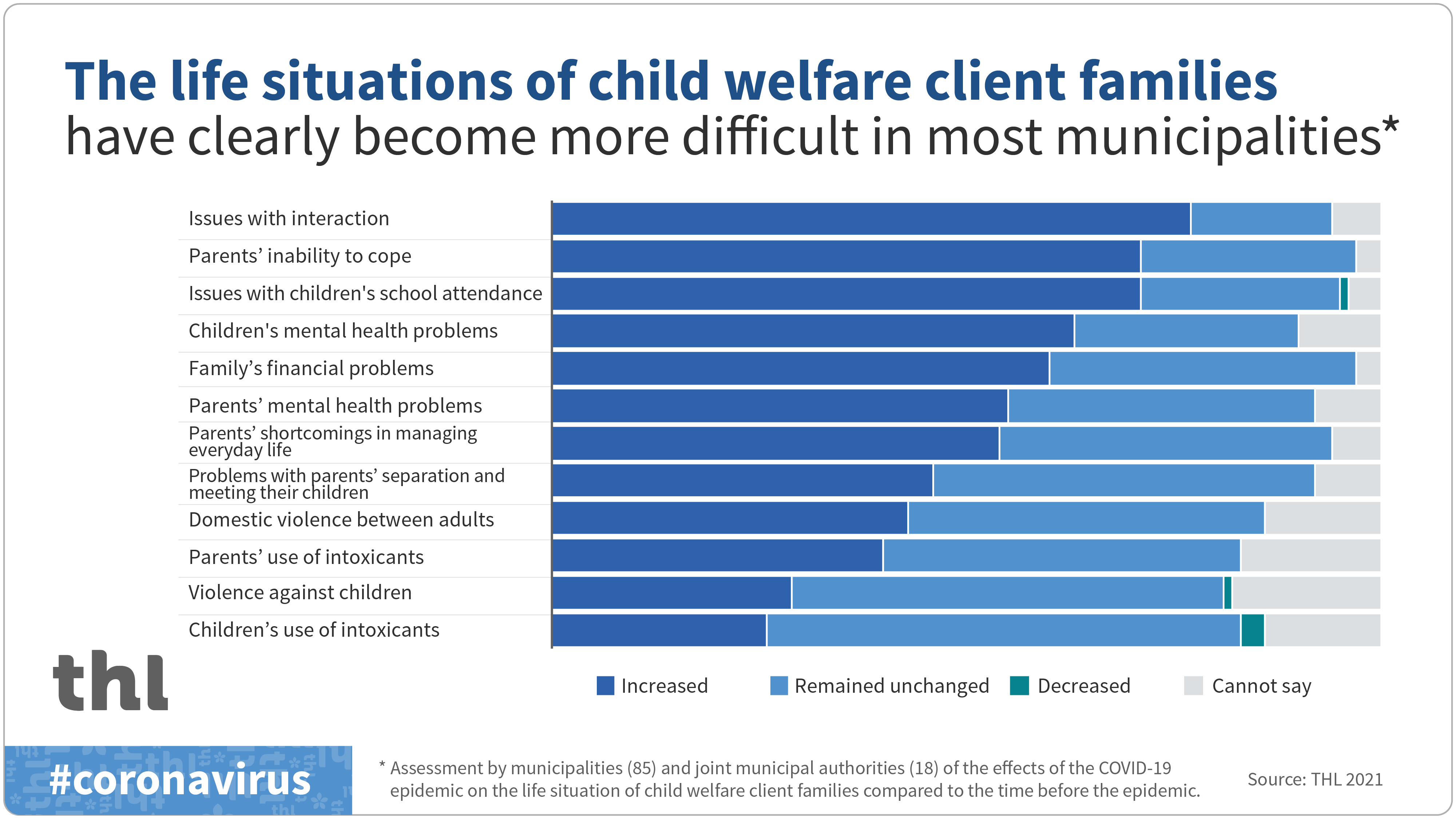
The life situations of child welfare client families have clearly become more difficult in most municipalities. Up to 63% of municipalities estimated that children's mental health problems had increased compared to the time before the COVID-19 epidemic. Similarly, 55% of municipalities estimated that parents experience more mental health problems than before.
“The increase in mental health problems is concerning. Post pandemic, we need to pay special attention to the availability of mental health services for children and adolescents", says Pia Eriksson, Senior Researcher at THL.
More than 70% of the municipalities and joint municipal authorities that responded to the survey estimated that child welfare client families were experiencing an increased amount of problems with interaction, parents’ inability to cope and children’s school attendance.
Availability of social welfare and health care services deteriorated in winter
According to the survey, the availability of social and health care services for child welfare clients deteriorated during the winter as a result of the COVID-19 epidemic, compared to autumn 2020.
“A particular challenge seems to be that child welfare clients have poor access to psychiatry services for children and adolescents and the services provided by the educational system and pupil welfare services. Schools need to invest in the wellbeing of children and adolescents by paying particular attention to the resources of pupil welfare services”, says Senior Specialist Annukka Paasivirta from the Central Union for Child Welfare.
Of the municipalities and joint municipal authorities that responded to the survey, 56% estimated that access to pupil welfare services and the services provided by the education system had become at least somewhat more difficult. As for psychiatry services for children and adolescents, it was estimated that access had become more difficult in winter at least to some extent in 62% of municipalities and joint municipal authorities.
There have been shortcomings in child welfare services for a long time, even before the COVID-19 epidemic, making it difficult to assess the direct impact of the epidemic.
“Still, it's clear that the epidemic has made the situation worse. It has also highlighted existing shortcomings. In addition to strengthening other services, we need to also secure resources for municipal child welfare so that we can meet the increased need for services”, Eriksson says.
Further information:
Read more from the research report (in Finnish)
Pia Eriksson
Senior Researcher
THL
tel. +358 29 524 7744
[email protected]
Annukka Paasivirta
Senior Specialist
Central Union for Child Welfare
tel. +358 40 647 2515
[email protected]


