
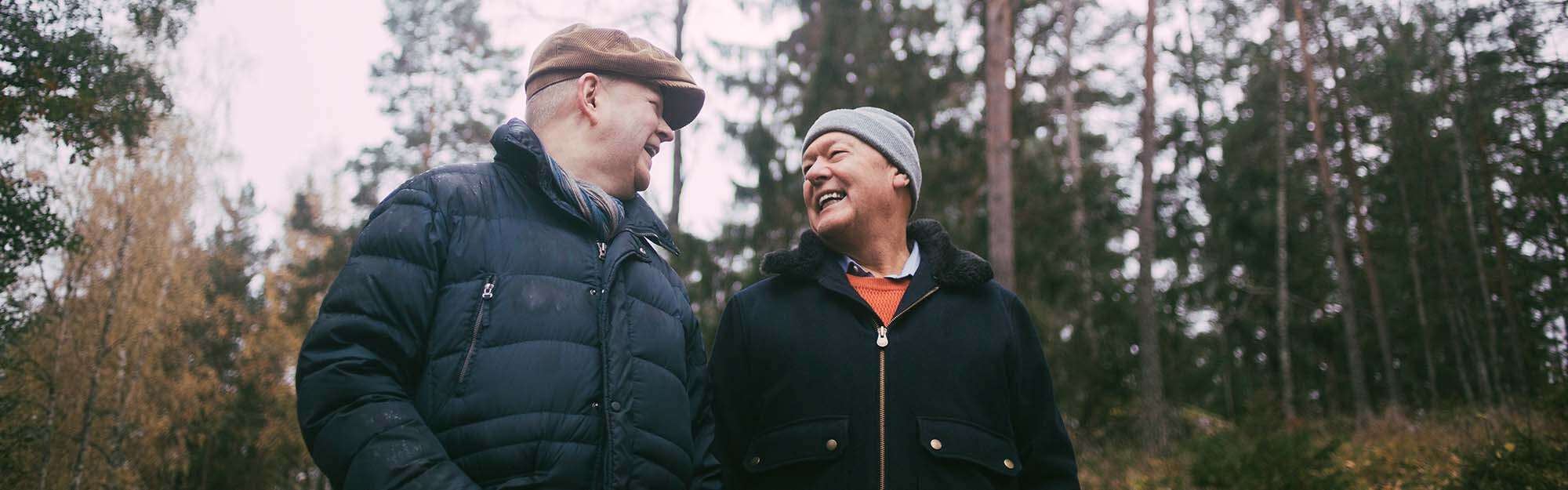
Active mobility and sustainable energy use help mitigate climate change and promote population health. The state, municipalities, wellbeing services counties and employers can promote active mobility and sustainable energy use in many different ways.
Physical activity promotes health and reduces social and health care costs
Active mobility and physical activity have numerous positive effects on physical, mental and social well-being. They improve sleep quality and cognition, such as memory and problem-solving skills. Being physically active helps manage stress and reduces anxiety. Regular activity prevents weight gain and several diseases. As people age, physical activity helps maintain overall functional capacity.
According to the Healthy Finland Survey conducted by THL, fewer than half of men and women aged over 20 meet the recommendations for health-enhancing physical activity, meaning both endurance exercise and muscle-strengthening activity in the recommended amounts. More than half mainly commute to work or study by car.
Low levels of physical activity, prolonged sitting and poor physical fitness cause substantial costs to society. These costs arise, for instance, from sickness absences, reduced work ability and health care expenditure.
Physical activity can be increased in many ways, both locally and nationally. Employers can also support their employees’ physical activity.
What can municipalities and employers do to promote physical activity?
Municipalities are responsible for many services and conditions that enable residents to engage in physical activity, and therefore have a significant role in promoting it.
- Accessible and barrier-free local sports facilities, as well as free or low-cost exercise services, enable as many residents as possible to participate in physical activity.
- Municipalities can also develop innovative solutions that support physical activity throughout the year, regardless of weather conditions. Examples include walking in shopping centres during heatwaves or icy conditions.
- Municipalities can promote active modes of transport by developing the built environment, strengthening public transport, allocating safe street space for walking and cycling, and ensuring that walking and cycling routes are well maintained, including in winter.
- Reducing the number of parking spaces or introducing parking fees decreases the attractiveness of driving and may encourage people to choose walking, cycling or public transport instead of private cars.
Employers can also promote active mobility in various ways.
- Employers can ensure the availability of safe bicycle parking and adequate changing and washing facilities.
- Employers can support the use of public transport, which increases the amount of physical activity compared to car travel. Employees may also have access to a company bicycle benefit.
- Walking meetings and active breaks increase physical activity during the workday. Workplaces can also encourage movement by providing bicycles for work-related errands and by enabling employees to exercise during working hours.
- Flexible working hours and wellness or exercise benefits can also lower the threshold for being physically active.
Cold climate increases climate emissions from housing
Due to the cold climate and high housing spaciousness, housing-related climate emissions in Finland are high. Electricity consumption for heating accounts for the majority of carbon dioxide emissions from housing.
Electricity production is shifting towards renewable energy, but the transition is not yet fully complete.
Many Finns also heat their homes with wood, which accounts for around 40 per cent of Finland’s particulate emissions. Soot particles from wood burning contribute to climate warming, and the particulate matter, toxic and carcinogenic PAH compounds and other substances generated in wood combustion affect the development and symptoms of cardiovascular and respiratory diseases.
How can decision-makers promote sustainable energy use?
- The green transition can be supported by providing financial assistance for household energy renovations. For example, switching from oil heating to lower-emission alternatives such as geothermal heating reduces emissions.
- In densely populated areas, emissions from wood burning can impair air quality. Municipal regulations can be used to control the use of fireplaces.
- Land-use planning must take into account its impact on the energy efficiency of buildings. Green areas, tree zones and thoughtful placement of buildings act as windbreaks, provide shade and promote evaporation, thereby reducing the energy consumption of buildings.
- Energy efficiency agreements have also been important measures for decades. Through these agreements, Finnish companies, municipalities and other actors commit to improving their energy efficiency and reducing emissions in line with national and EU targets.
- Decision-makers can also promote the adoption of energy-efficient cooling systems in public buildings. Although ventilation and cooling systems consume energy, mechanical cooling protects older people and those with long-term illnesses from serious health effects during heatwaves.
Our everyday choices affect both human health and the environment
People’s health, climate change mitigation and other aspects of environmental well-being are not separate goals – many measures serve all of them at the same time.
Every step supports your health and the environment
Daily motion is one of the best ways to take care of your own wellbeing while also reducing environmental impact.
Reduce your home’s energy consumption wisely
Cutting energy consumption is the most significant way an individual household can reduce its climate and environmental impacts. At the same time, it is important to consider the health effects of energy-saving measures.
Healthy Finland
The Healthy Finland survey will provide up-to-date information on the health, well-being and service use of people living in Finland, as well as on changes and future developments in these areas. The study also forms a situation picture for the different wellbeing services counties.