Social innovations
Social innovations as a means of reforming child protection
In Finland, the European Social Fund's plus period Social Innovations funding is directed towards reforming child protection through "Developing Future Safety Nets for Young People" program The development of social innovations is a funding condition for regional projects and coordination activities.
According to the "Developing Future Safety Nets for Young People" program, social innovations are
- social in their goals, social in their means and broadly related to the everyday lives of children, young people and families.
- they are new, functional ideas that help find solutions to society's needs and problems.
- they have a positive impact on society, and their implementation creates new interactions.
Special features of social innovations in child protection and at interfaces
The features of social innovations are the result indicators of the program period. The program uses 16 specific characteristics of social innovations, corresponding to the definition of the Young Foundation (2012), as tools for analyzing social innovation ideas in child protection. The specific features have been compiled from the Renewing and Competent Finland 2021–2027 programming document, Developing Future Safety Nets for Young People theme descriptions and the application guidelines (2023).
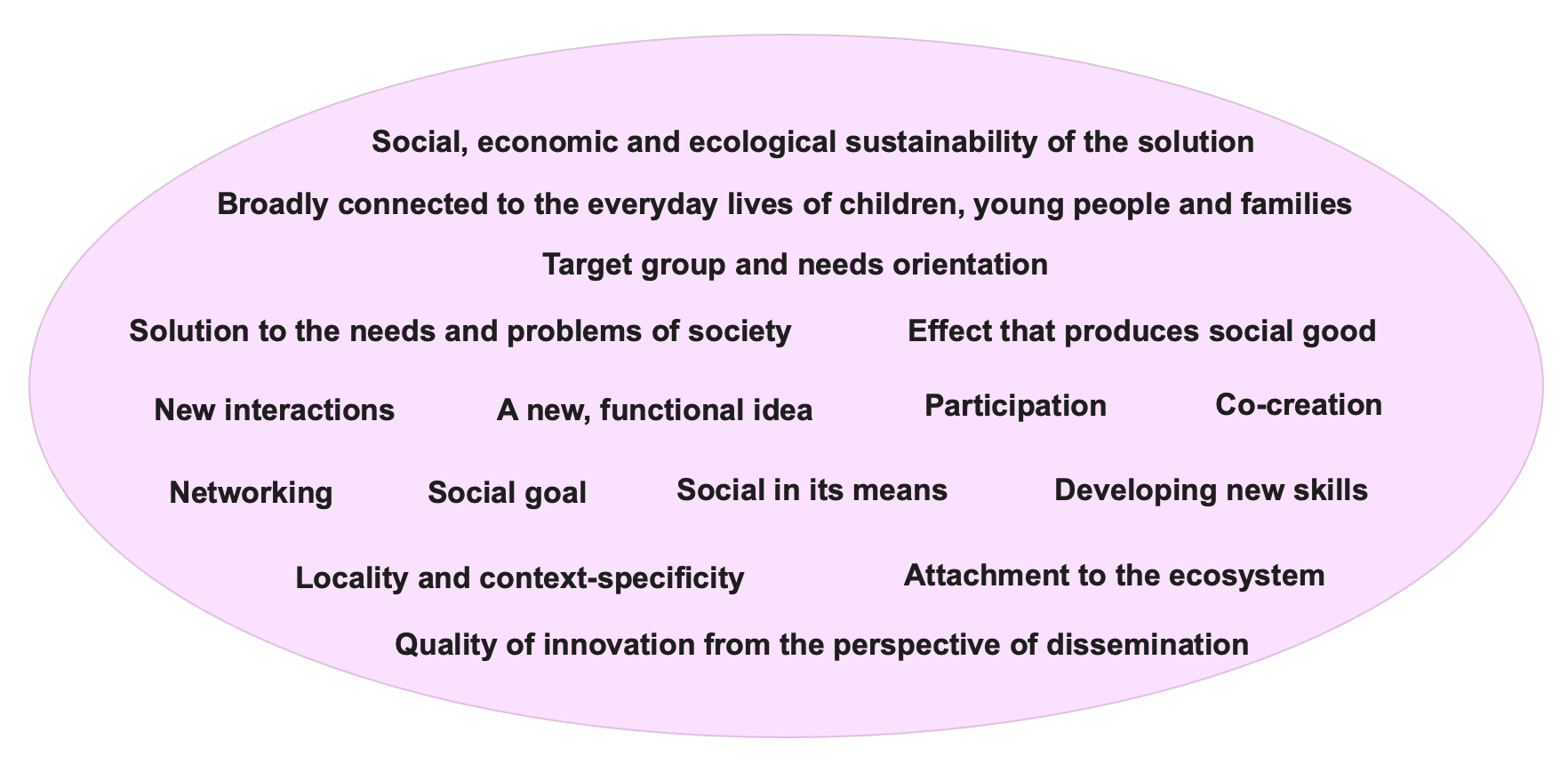
Figure 1. Specific features of social innovation in child protection. Source: Jäppinen et al. 2024.
Definitions of social innovation
Social innovation refers to new practices, practices or operating models developed and implemented by child protection professionals and other actors that completely or partially reform child protection together with service users. The definition of social innovation recorded by the program is in line with other existing definitions. For example, the Young Foundation (2012) has made the definition of social innovation used by the European Union:
“Social innovations are new solutions (products, services, models, markets, processes, etc.) that simultaneously respond to a societal need (more effectively than existing solutions) and lead to new or improved capabilities and interactions, and to better use of assets and resources. In other words, social innovations are both good for society and increase the functioning of society.”
Demos Helsinki (2022) has also developed a definition of social innovations:
“Social innovations are new, functional ideas - services, products, models, processes or strategies - that seek solutions to society's needs and problems that are better than established alternatives. Their clear goal is the common good and improved well-being of people or nature.”
“The impact mechanisms of social innovations are diverse: they fundamentally change routines, resource flows, power relations or prevailing perceptions. They are social not only in their goals but also in their means: when solving problems and satisfying needs, they simultaneously change or create new social relations and cooperation, often give people a role in satisfying needs and thus improve the ability of individuals and society to act. Social innovations can be developed by public, private and third sector actors, users and communities, both as part of public services and outside of them.”
Sources:
The Young Foundation (2012) Defining social innovation. Deliverable 1.1 Social Innovation Overview: A deliverable of the project: The theoretical, empirical and policy foundations for building social innovation in Europe TEPSIE European Commission – 7th Framework programme (290771)