

The Roma
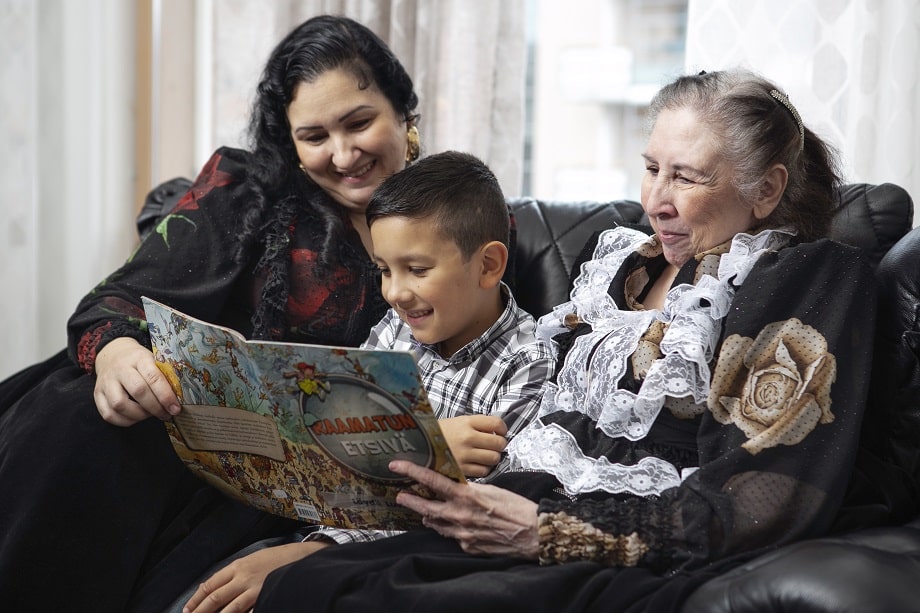
The Finnish Roma are a traditional national minority that has lived in Finland for over 500 years. The Constitution of Finland guarantees the Roma the right to their language and culture.
The Finnish Roma have actively sought to improve their position in Finnish society since the early 20th century. As a member state of the European Union, Finland is committed to improving the status of the Roma in accordance with the EU strategic framework programme approved by the member states.
EU Strategic Framework Programme for Roma Equality, Inclusion and Participation 2030 (National Advisory Board for Romani Affairs, in Finnish)
Romani culture lives in time and adjusts to the changing societal situation. This change can be seen, for example, as an increase in the level of education and an improvement in housing conditions.
The Roma community follows customs that differ in some respects from the general population’s practices, for example, regarding the concept of cleanliness and age-related norms. For example, Roma people do not shake hands when meeting each other. Physical space is also approached differently compared to the general population. For example, if you are worried about seating arrangement at an event, you should ask the Roma participants about it directly. However, the Roma population emphasises that in any encounter, it is the individual who is met—not the culture
Romani Culture (Romanit, in Finnish)
Roma policy promotes equality
Inequality affecting Roma has been recognised both in Finland and more widely at the European level. The improvement of the social status and equality of the Roma are supported, for example, by the Roma policy strategy steered by the European Union, the EU’s strategic framework programme and Finland’s Roma policy programme (Rompo3).
Finnish Roma Policy Programme (Rompo) 2023–2030 (Publication Archive Valto)


