
The first years have been spent integrating services and operating models previously managed by municipalities and joint municipal authorities.
Wellbeing services counties have restructured service networks, developed digital services, and harmonised operating practices. Progress varies by regions, which is understandable: operating environments and starting points differ.
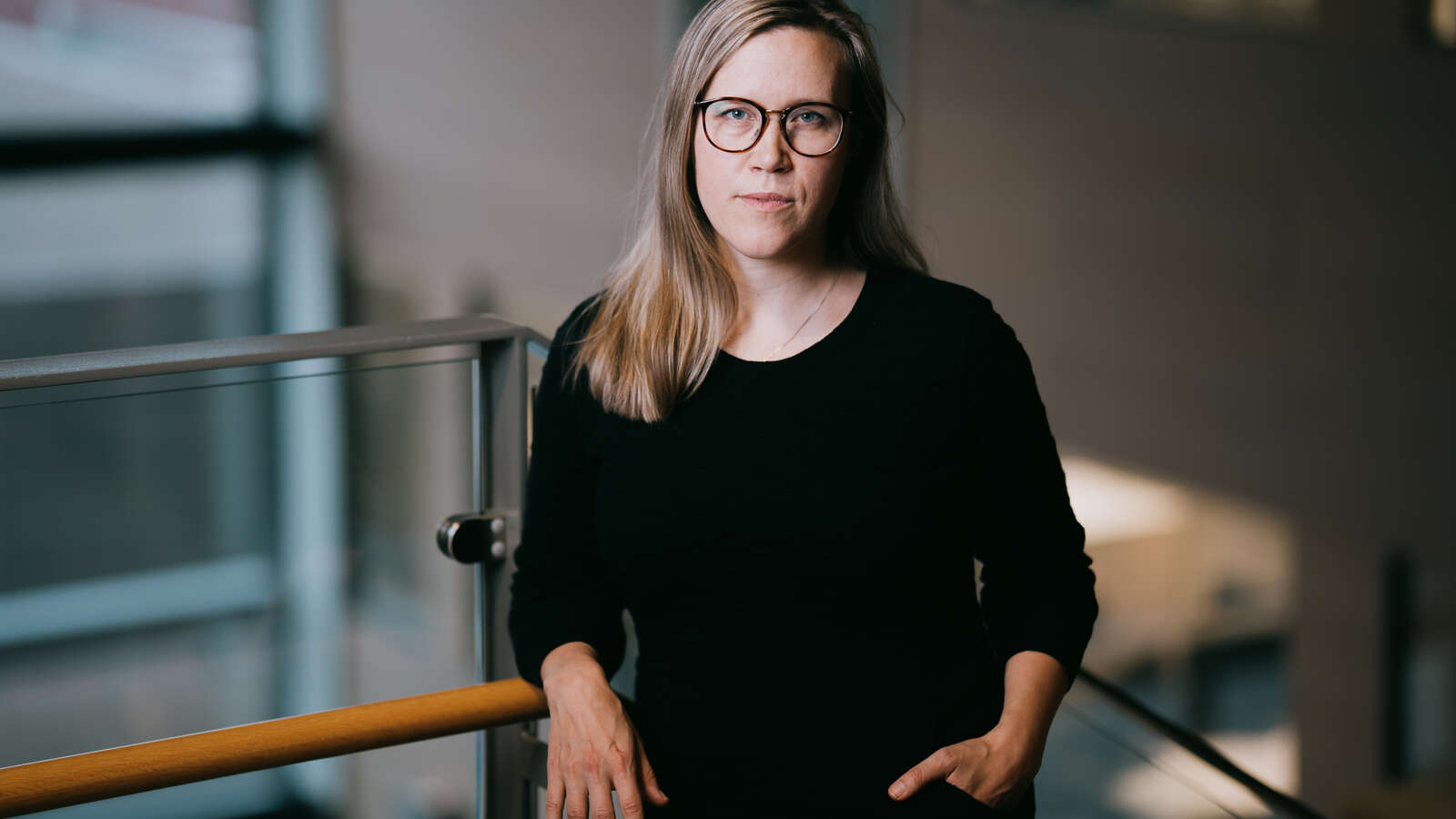
“It is important to remember that this is an exceptionally large administrative reform. The wellbeing services counties only started three years ago. The reform is visible in people’s everyday lives, for example in new client applications, as ways of contacting services may have changed significantly. Naturally, the centralisation of physical service points is also noticed if the distance from home to services has increased,” says Chief Physician Sara Launio.
Responsibilities and duties of the wellbeing services counties
Wellbeing services counties are responsible for a vast range of services, from maternity and child health clinics to child protection, from lifestyle counselling to intensive care. The backbone of the system consists of primary-level services, where most concerns are addressed and assessments are made regarding what kind of support is needed.
Social services provide support in situations where coping in daily life, financial difficulties, or family circumstances create strain. Healthcare services support functional capacity through prevention as well as through high-quality treatment of disease.
Wellbeing services counties are also responsible for specialised services in both healthcare and social care. Certain functions, such as demanding surgery, are centralised in university hospitals, while specialist care for common illnesses and emergency services are provided in all wellbeing services counties.
In addition, wellbeing services counties train health and social care professionals, maintain preparedness and emergency readiness, and work closely with municipalities and the third sector to promote health and wellbeing. They also play a significant role in research within the health and social services sector.
The system is complex, but the objective of the reform has been to create as unified a service pathway as possible around people’s needs.
Encounters are positive and service users are satisfied
According to the Finnish Institute for Health and Welfare’s (THL) Healthy Finland Survey, two out of three users of health services and just over half of users of social services reported that their most recent appointment had been a positive experience. Surveys on client experiences in maternity and child health clinics, oral healthcare, and health centres also indicate that service quality is perceived as good.
At the same time, the health and social services system has sparked intense public debate. Financial pressures, workforce shortages, and changes to service networks have featured prominently in public discussion, which may increase uncertainty — even when individuals’ own experiences of services have been positive.
“Trust is not built solely in the consultation room, but also through how changes are communicated and how well people understand the direction in which the system is heading,” Launio notes.
Changes in services and their impacts are closely monitored. THL compiles data, for example, on service quality, access to care, and client experiences to ensure that decisions are based on up-to-date information.
Wellbeing services counties are developing new ways to provide support — digitally and close to home
Despite challenges, wellbeing services counties have succeeded in developing services. Digital services have progressed rapidly. Many issues can now be resolved online without waiting in line, and remote appointments complement face-to-face visits.
As digital services do not meet everyone’s needs, wellbeing services counties are ensuring access by developing mobile services, health centres and home-based services alongside digital options. For example, in regions with long distances, outreach teams can bring services closer to those who would otherwise need to travel far.
A key objective is to clarify service pathways. This is reflected in closer cooperation between social and health services rather than parallel operations — for example in collaboration between mental health, substance use services, and social services, or in family support services.
The goal is that individuals do not have to repeat their story again and again to different professionals, but experience services as forming as a seamless whole.
Trust is the foundation of the care relationship — Continuity makes care more effective
Regardless of the service system model, what matters in people’s daily lives is whether they receive help when they need it. In addition to improving access to care, strengthening continuity of care is one of the key objectives in service development. The reasoning is simple: when a person meets the same professionals repeatedly, care is safer, higher quality, and more effective. In primary-level services, this means that individuals should have their own designated professional or team who knows their situation without constantly starting from scratch.
"Public services are, in my view, one of our national treasures, and we must know how to build and develop them wisely.”
“Based on international research, personal continuity of care is essential for organising high-quality primary healthcare. Evidence shows reductions in morbidity and mortality, improvements in quality and patient satisfaction, as well as reductions in overall costs,” Launio explains.
Wellbeing services counties have developed various solutions to build this so-called personal doctor model.
“Some wellbeing services counties have offered personal doctor services to the entire population, while others have started with those who require frequent services and plan to expand the model gradually. Experiences have been encouraging, and the work toward ensuring that everyone has their own doctor continues,” Launio says.
“We now have a nationwide and systematic objective to build continuity. It will not happen overnight and requires resources, but the direction is shared.”
Equality as a guiding principle
A central principle of social and health services — also defined by law — is equality. People receive help based on need, not ability to pay. Services are primarily funded through taxation, and a maximum fee cap protects individuals from excessive costs.
“In Finland, the fundamental principle is that everyone has an equal right to social and healthcare services — historically and internationally, such an even distribution of wellbeing is not self-evident,” Launio notes.
“It is visible very concretely in everyday life: we are committed to maintaining people’s functional capacity so that they can pursue what matters to them. I feel genuine satisfaction when, in the emergency department, I can refer a patient to a pacemaker queue without asking about their ability to pay or insurance coverage. At the same time, social inequality is clearly visible in emergency care.”
“Health and wellbeing are, of course, shaped in many places beyond social and healthcare services — in daily life, communities, and other public structures. Public services are, in my view, one of our national treasures, and we must know how to build and develop them wisely,” Launio concludes.